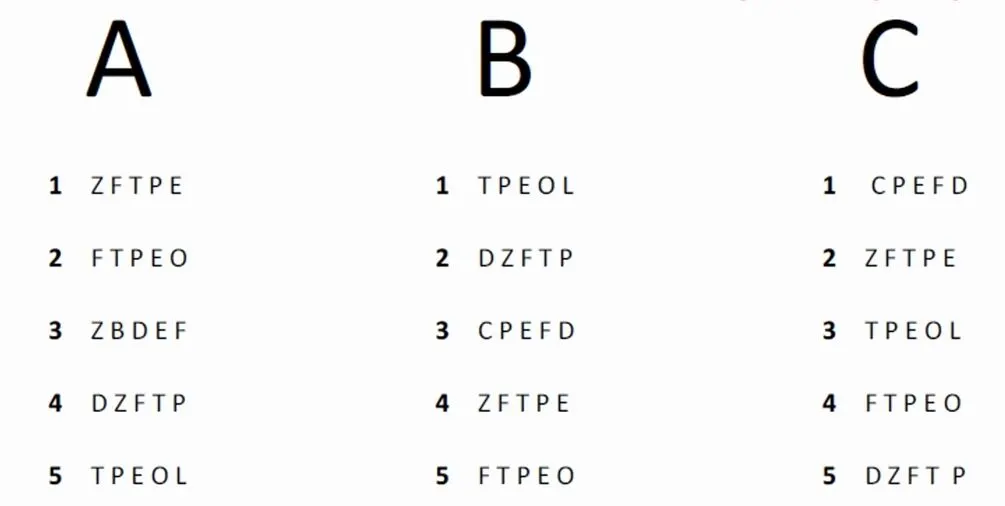
California DMV Eye Chart
Vision plays a critical role in safe driving, which is why the California DMV requires drivers to meet minimum eyesight standards. Whether you are applying for a new license, renewing an existing one, or being called in for a reexamination, you may be asked to take a vision screening using the California DMV eye chart.
For many drivers, this test causes unnecessary anxiety simply because they don’t know what to expect. The good news is that the DMV eye chart test is straightforward, quick, and designed to identify only vision issues that could affect driving safety.
What Is the California DMV Eye Chart?
The California DMV eye chart is a standardized visual acuity test used to evaluate whether a driver can see well enough to operate a vehicle safely. It is similar to the familiar eye charts used in doctors’ offices, with rows of letters that decrease in size.
At the DMV, the eye chart is used during:
- Driver’s license applications
- License renewals that require in-person visits
- Reexaminations
- Certain medical or age-related reviews
The test measures distance vision, which is essential for reading road signs, recognizing hazards, and reacting appropriately while driving.
When You Are Required to Take a DMV Vision Test
Not every DMV visit includes a vision screening, but there are several situations where it is mandatory.
You will typically take the eye chart test if:
- You are applying for a driver’s license for the first time
- You are renewing your license in person
- You are required to retake tests after a suspension or revocation
- You are referred for a reexamination
- You are renewing a license at an older age, where vision screening is required
In some cases, the DMV may also require a vision test if it receives a medical report or law enforcement referral indicating a possible vision concern.
How the DMV Eye Chart Test Works
The DMV vision test is brief and non-invasive. You will be asked to stand or sit a set distance from the chart and read letters from it, usually starting with larger letters and moving to smaller ones.
You may be tested:
- With both eyes open
- One eye at a time
- With or without corrective lenses, depending on your situation
If you normally wear glasses or contact lenses to drive, you should wear them during the test. The DMV is testing your functional driving vision, not your uncorrected eyesight.
The entire process usually takes only a few minutes.
Minimum Vision Requirements in California
California requires drivers to meet minimum visual acuity standards to hold an unrestricted license.
In general:
- You must be able to see 20/40 or better with both eyes together, with or without correction
- At least one eye must meet minimum standards
- Drivers who do not meet these standards may still qualify for: A restricted license, Further medical evaluation, Additional testing
The DMV evaluates each case individually rather than automatically denying driving privileges.
What Happens If You Pass the Vision Test
If you pass the eye chart test, you can continue with the rest of your DMV transaction without delay. If you used corrective lenses to pass, your license may include a restriction requiring glasses or contacts while driving.
This restriction is common and simply means you must wear corrective lenses whenever you operate a vehicle. It does not affect your driving privileges beyond that requirement.
What Happens If You Do Not Pass the DMV Eye Chart
Failing the initial vision screening does not automatically mean you lose your license.
If you do not pass:
- The DMV may refer you to a vision specialist
- You may be asked to submit a Vision Evaluation Form completed by an eye doctor
- Your license may be temporarily restricted while further review takes place
The DMV allows drivers to demonstrate that their vision can be corrected to safe levels with glasses or contacts. Many drivers who fail the first screening later qualify once corrective lenses are prescribed.
Vision Evaluation by an Eye Doctor
If referred for further evaluation, you will need to visit an optometrist or ophthalmologist. The doctor will assess your vision and complete DMV paperwork indicating whether your eyesight meets driving standards.
This process helps the DMV determine:
- Whether you can drive safely
- Whether restrictions are necessary
- Whether additional monitoring is required
Once the DMV receives and reviews the completed form, it will decide how to proceed.
Vision Restrictions on California Driver’s Licenses
Some drivers receive vision-related restrictions rather than a denial of driving privileges.
Common restrictions include:
- Requirement to wear corrective lenses
- Daylight-only driving
- Geographic driving limitations (in rare cases)
Restrictions are designed to balance safety with independence and are applied only when necessary.
What Happens When They Approve the DMV Eye Chart?
Many drivers worry that minor vision issues will automatically lead to license loss. In reality, the DMV’s goal is safety, not punishment. The vision standards are meant to ensure drivers can read signs, recognize hazards, and react appropriately on the road.
Another common concern is age-related testing. While older drivers may be screened more frequently, age alone does not disqualify anyone from driving. Decisions are based on vision performance, not age.
How Vision Testing Fits Into DMV Safety Standards
The California DMV includes vision screening as part of its broader commitment to road safety. Clear vision is essential for reading traffic signs, spotting pedestrians, and reacting quickly to changing conditions.
By using standardized eye chart testing, the DMV helps ensure that drivers on California roads meet minimum safety standards while also providing reasonable accommodations and options for correction when needed.
All vision evaluations and final determinations are handled under the authority of the California Department of Motor Vehicles.
What Is a DMV Vision Reexamination?
A DMV vision reexamination is a more detailed review of a driver’s eyesight than the standard vision screening. While a routine vision test is often just a quick eye-chart check, a reexamination may involve additional steps, documentation, or follow-up evaluations.
The purpose of the reexamination is simple: to determine whether your vision meets California’s minimum standards for safe driving, either with or without corrective lenses. The DMV is not trying to disqualify drivers unnecessarily. Instead, it aims to balance individual mobility with public safety.
All vision reexaminations are conducted under the authority of the California Department of Motor Vehicles and are handled on a case-by-case basis.
Why the DMV May Require a Vision Reexamination
There are several reasons a driver may be asked to complete a vision reexamination. In many cases, the driver did nothing wrong.
Common triggers include renewing a license in person and not meeting the minimum standard during the initial eye-chart test. Age-related renewals may also prompt additional screening, as vision can change over time even when drivers feel their eyesight is fine.
The DMV may also require a reexamination after receiving a medical report from a physician, a referral from law enforcement, or information suggesting that a driver’s vision may have declined. In some cases, the reexamination is part of a broader DMV review that includes medical or driving evaluations.
Importantly, being referred does not automatically mean your license will be suspended. It means the DMV needs more information before making a decision.
What Happens During a Vision Reexamination
A vision reexamination usually begins at a DMV office. You may be asked to take another eye-chart test under controlled conditions, sometimes with each eye tested separately and then together.
If you normally wear glasses or contact lenses for driving, you should wear them during the test. The DMV is evaluating your corrected vision, not your uncorrected eyesight.
If the DMV needs more detailed information, you may be given a Vision Evaluation Form to take to an optometrist or ophthalmologist. This form allows an eye care professional to measure your visual acuity, visual fields, and overall eye health and report those findings back to the DMV.
Minimum Vision Standards During Reexamination
California generally requires drivers to have at least 20/40 vision with both eyes together, with or without correction. At least one eye must meet minimum standards.
If you do not meet this standard during the reexamination, it does not automatically end your driving privileges. The DMV may consider corrective lenses, restrictions, or additional evaluations before making a final decision.
Each case is reviewed individually, and many drivers continue driving with restrictions rather than losing their license entirely.
Vision Evaluation by an Eye Doctor
If referred to an eye doctor, it’s important to schedule the appointment promptly and ensure the form is completed fully. Incomplete or missing information is one of the most common reasons DMV reviews are delayed.
The eye doctor will assess whether your vision can be corrected to safe driving levels and whether any conditions affect your ability to drive. They will indicate whether corrective lenses are required and whether there are any limitations that should be considered.
Once completed, the form must be returned to the DMV for review. The DMV will not make a decision until it receives and evaluates this documentation.
Possible Outcomes After a Vision Reexamination
After reviewing all information, the DMV may take one of several actions.
If your vision meets standards, your license will remain valid, possibly with a corrective-lens restriction. This is common and simply requires you to wear glasses or contacts while driving.
In some cases, the DMV may issue a restricted license. Restrictions can include daylight-only driving or other limitations designed to reduce risk while allowing continued mobility.
If vision does not meet minimum safety standards even with correction, the DMV may suspend driving privileges. While this outcome is less common, it is usually based on clear medical findings rather than a single failed screening.
Can You Drive While the Reexamination Is Pending?
Whether you can continue driving during the review depends on the specifics of your case. Some drivers are allowed to drive while paperwork is being reviewed, while others may be temporarily restricted.
It is critical to follow the instructions in your DMV notice. Driving when not authorized can lead to additional violations and complicate the situation further.
How to Prepare for a Vision Reexamination
Preparation can make a significant difference. Before your DMV appointment, consider having a routine eye exam, especially if you suspect your vision has changed. Bring your current glasses or contact lenses and make sure your prescription is up to date.
Avoid eye strain before the test, rest your eyes, and stay hydrated. Small factors like fatigue and dryness can affect performance on a vision screening.
Most importantly, approach the reexamination calmly. Many drivers pass once they understand what is being tested and use appropriate corrections.
Moving Forward With California DMV Eye Chart
The California DMV eye chart test is a simple but important part of the driver licensing process. It is designed to protect both drivers and the public by ensuring that everyone behind the wheel can see well enough to drive safely.
Most drivers pass without difficulty, especially when wearing corrective lenses if needed. Even if issues arise, the DMV provides opportunities for medical evaluation and correction rather than immediate denial.